Temperature Monitoring of Pharmaceuticals: A Complete Guide
Temperature & Pharmaceuticals
Under the term “pharmaceuticals”, all kind of materials and products are summarized such as drugs, medicines, bio-pharmaceuticals, API, research materials, human body samples or even medical devices. What they all have in common is that their properties and therefore their quality change with temperature – for example:
- Proteins decompose depending on time and temperature - the higher the temperature, the faster they fall apart
- Gel turns to liquid at high temperatures
Compared to food products, pharmaceuticals typically don’t change their smell and optical appearance when exposed to wrong temperatures. But they change their potency and their effectiveness. Therefore losing stability budget might be harmful to patient safety.
Which products fall under the category of “temperature sensitive pharmaceutical products”?
Qualification & Mapping
All you need to know about qualification, validation & mapping
Temperature Data Logger
All you need to know about the temperature data loggers
GMP & GDP Compliance
All you need to know about GxP compliance in monitoring solutions
The Pharma Supply Chain
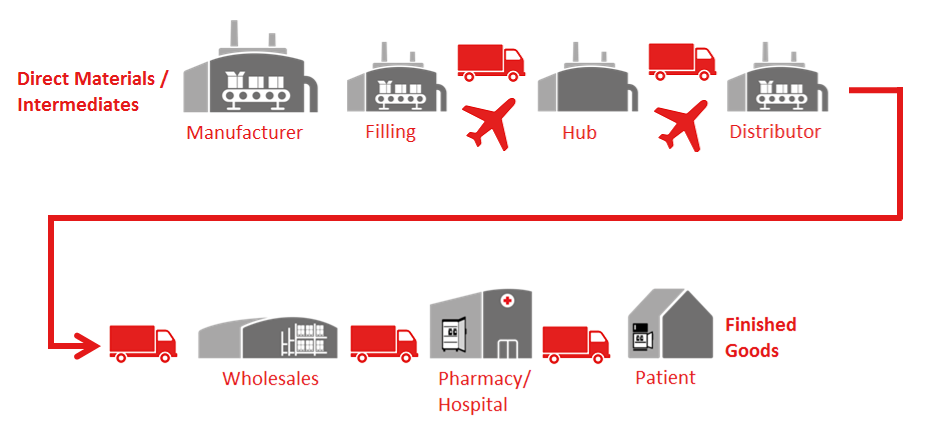
Like most supply chains of industrialized products, the pharma supply chain is complex and consists of multiple steps. Furthermore, the supply chain of every pharmaceutical product looks different and depends on the product complexity as well as the production region. While expensive products like genetically engineered drugs typically have a very short supply chain, low-price over-the-counter drugs like Aspirin have a much more complex supply chain with multiple steps between production and patient. What all pharma supply chains have in common is the distinction between the transportation of Active Product Ingredients (API) and finished packaged products. Lately, the scope of temperature data monitoring is increasingly including the last transportation mile to the pharmacy or even to the patient. Direct-to-Patient-Shipments (DtP) are becoming increasingly popular and important, especially with regards to clinical trials but also for personalized drugs.
How relevant is humidity for the pharma supply chain?
Humidity is relative to temperature and represents the amount of water present in the air. Humidity is highly relevant in the pharmaceutical production as long as the product is in its open form before primary packaging (i.e. liquid or powder). After primary packaging, the relative humidity typically loses its direct relevance to patient safety. It is nevertheless common to monitor relative humidity in warehouses to avoid negative impact on the labeling and packaging (i.e. paper, cardboard). In most shipments however, the only quality relevant parameter is temperature. Data loggers therefore usually don't monitor Humidity inside the transportation container.
Transportation Conditions vs. Storage Conditions
Although every pharmaceutical product has an individual stability budget, they are clustered into standard temperature data range groups for storage and for transportation. As storage conditions we typically see the temperature ranges -196°C, -80°C, -20°C, 2-8°C and 15-25°C. As transportation conditions the labels are "liquid nitrogen" (-196°C), "dry-ice" (-78°C), 2-8°C and 15-25°C. The storage condition “frozen” (-20°C) is not very often seen in transportation for mainly two reasons. Frozen products are in most cases not sensitive to ultra-low temperature. It is therefore cheaper to use dry-ice than to use expensive and complex compression cooling.
The Regulatory Environment of Pharma Companies
If a company wants to research, produce, store, transport or sell pharmaceutical products, they are subject to regulatory requirements. The laws and regulations are specific to each country and typically include a national or international authority like the FDA (in the United States), EU (in Europe) or Swissmedic (in Switzerland), all coordinated by the ICH (International Council for Harmonisation of Technical Requirements for Pharmaceuticals for Human Use).
In addition to official regulations, there are a number of important associations issuing guidance documents supporting and detailing the regulations and their application in specific situations. Some of the most influential organisations relevant to the pharmaceutical supply chain industry are the ISPE (International Society for Pharmaceutical Engineering), the USP (United States Pharmacopeia), the PDA (Parental Drug Association) and the WHO (World Health Organisation). The regulatory framework is therefore a living organism which changes almost daily with new laws becoming effective and new guidance documents being published.
GMP vs. GDP – what are the differences?
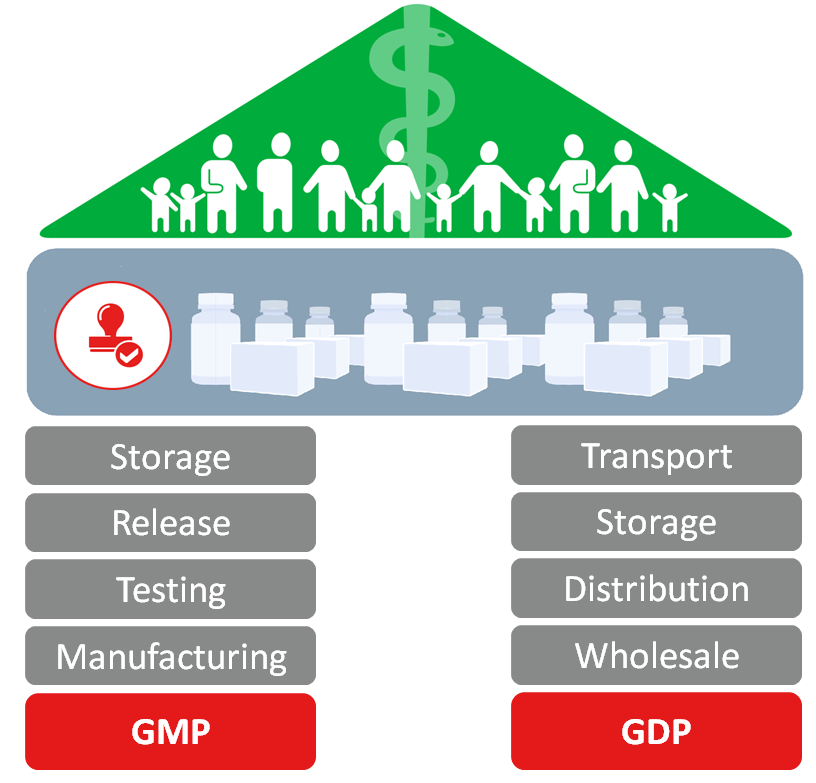
From a drug supply chain perspective, the cornerstones of the regulatory framework are the Good Manufacturing Practice system (GMP) and the Good Distribution Practice system (GDP) – or often jointly referred to as GxP. While GMP lays its focus on activities around manufacturing (including testing, release & storage), GDP focuses on the distribution including transportation, storage & wholesale of pharmaceuticals products. Both, GMP and GDP aim to increase public health by ensuring the product quality.
Compliance in the context of the pharmaceutical supply chain
In a nutshell: if you store or transport pharmaceutical products and want to comply to GMP and GDP guidelines you must:
- produce, handle, store and transport your products in qualified facilities
- the temperatures must be monitored by a compliant monitoring system (audit trail)
- and the sensors must be calibrated regularly
The same applies to the transportation but with more focus on the requirements of fleets, containers, boxes and single-use equipment.
All about Monitoring Solutions
The history of monitoring solutions started more than 30 years ago with Autonomous Temperature Data loggers – like for example ELPRO’s legendary HAMSTER. Driven by a battery, the data logger recorded temperature and humidity measurements and was able to transmit its internal memory to the analysis software through an interface. Since the autonomous temperature data loggers were compliant to the Hazard Analysis and Critical Control Point (HACCP) standards, the food and beverage industry as well as heating, ventilation, and air conditioning companies (HVAC) used early applications of autonomous data loggers. Soon after that the pharmaceutical industry started to monitor refrigerators and cold rooms, too. Temperature data loggers were firstly used for laboratories and production facilities. Later on storage and transportation facilities were added to the scope.
In addition to official regulations, there are a number of important associations issuing guidance documents supporting and detailing the regulations and their application in specific situations. Some of the most influential organisations relevant to the pharmaceutical supply chain industry are the ISPE (International Society for Pharmaceutical Engineering), the USP (United States Pharmacopeia), the PDA (Parental Drug Association) and the WHO (World Health Organisation). The regulatory framework is therefore a living organism which changes almost daily with new laws becoming effective and new guidance documents being published.
Key Functions of Temperature Monitoring Systems
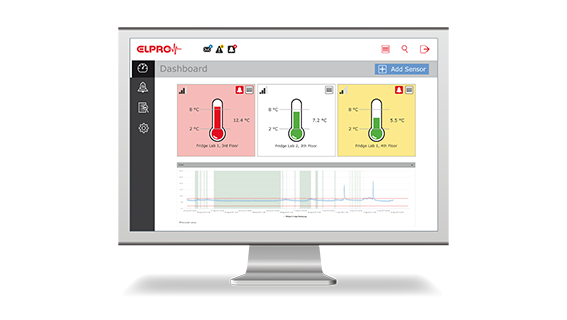
A monitoring system typically consists of a sensor conducting measurements of temperature or other environmental data in a defined interval. The sensor transmits the values wired or wireless to a data logger, which acts as a communication bridge. The Software collects the values in real-time in order to perform the following functions:
- assessing the data
- triggering warnings and alarms
- facilitating evaluation and acknowledgement
- performing regular reporting
- archiving the data
What is the difference between Building Management Systems and Temperature Monitoring Systems?
In any production environment and in many warehouses, state of the art Building Management Solutions (BMS) are installed to conducting measurements of temperature and environmental data like humidity, as well as giving commands to the air conditioning system. What is the difference to an independent Monitoring Solution? Other than Building Management Solutions, Monitoring Solutions never have control loops but instead are fully independent from any control mechanism. The validated independence of a Monitoring Solution is an important requirement of any GxP-guideline.
Parameters and Sensors
Research, production, testing and filling of pharmaceutical products are often performed in a clean room environment in which various environmental parameters such as temperature, humidity, pressure, pressure differentials, C02 and particles play an important role regarding the quality of the product. Therefore, monitoring solutions must be open to process, evaluate and display all kind of environmental parameters. As soon as a product is filled into a bottle, blister, vial or syringe, temperature is the only relevant environmental data which is important to the quality of the product.
Placement of sensors
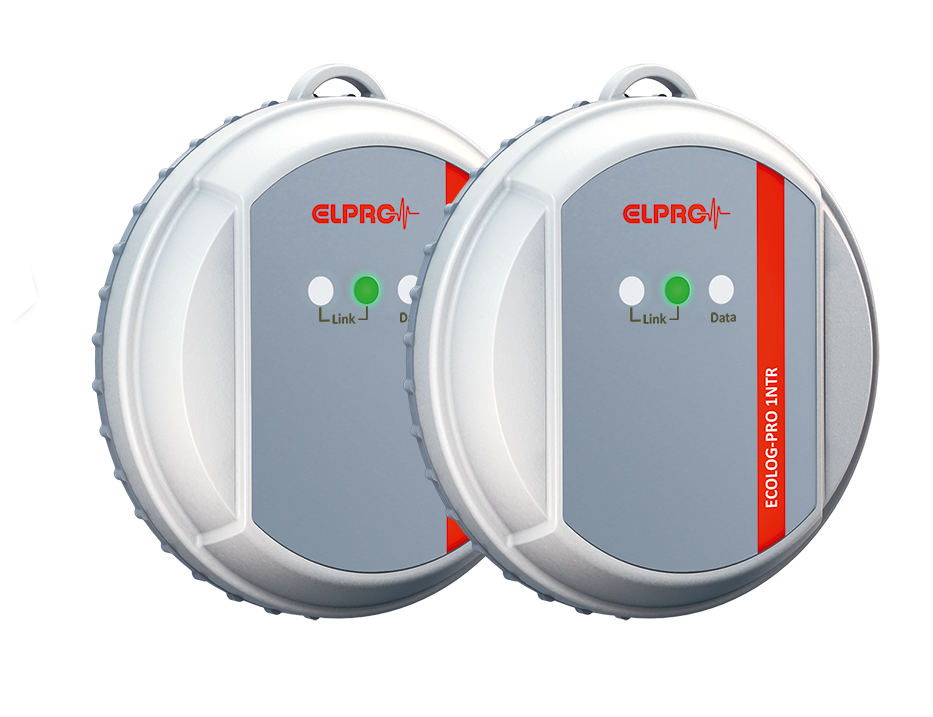
GMP and GDP guidelines require a qualification of the storage facility, refrigerator or transportation box. The most important part of the qualification is the thermal mapping process identifying the hottest and the coldest spot. Depending on the specific situation and the requirements, the right sensor can be chosen and placed. Depending on the scenario a mix between wired sensors (e.g. for 4to20mA transmitters) or wireless sensors (e.g. temperature and humidity) can be chosen.
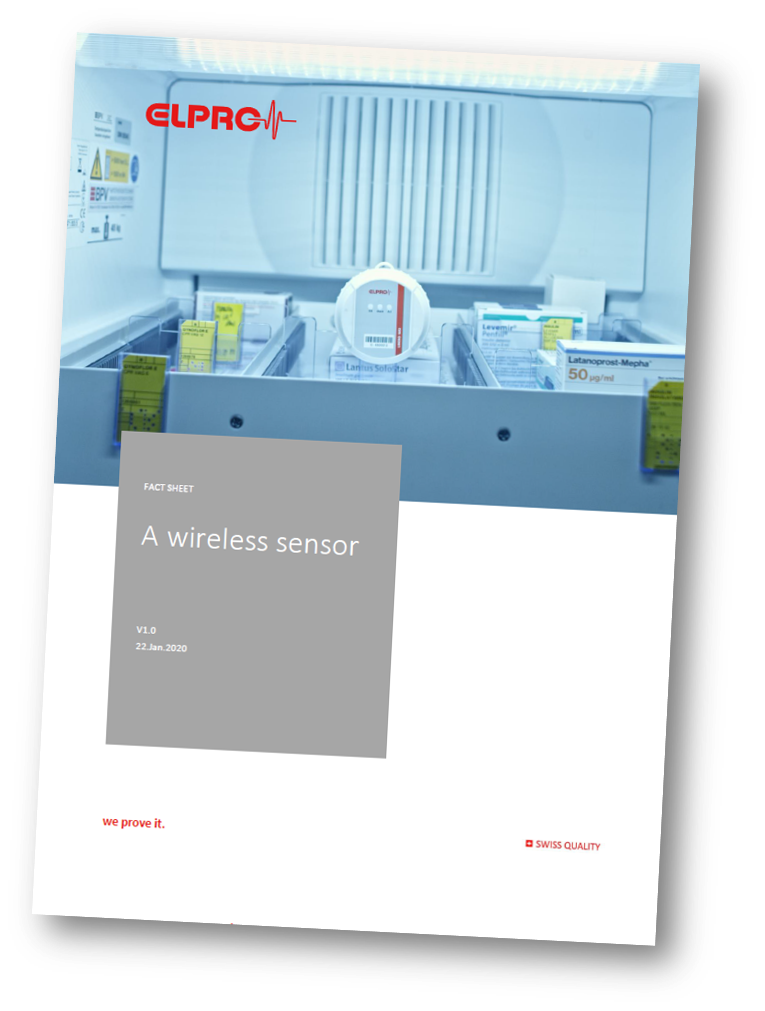
A wireless Sensor Factsheet
We've got you covered. Download our infosheet on everything you need to know about using wireless sensors for temperature monitoring.

Technologies of Temperature Measurements
To conduct temperature measurements electronically, there are different measurement technologies available – each of them having their advantages and disadvantages.
Thermocouples
- Physical Principle: Two different electrical conductors (bi-metal) changing resistance with temperature.
- Typical Application: Extreme temperatures (steel and iron industry)
- Advantages: Lowest cost
- Disadvantages: Drift over time
Negative Temperature Coefficient (NTC)
- Physical Principle: resistance decreases as temperature rises
- Typical Application: -30° to +70°C in internal or external sensors
- Advantages: Low cost & low energy, very stable over time
- Disadvantages: Limited temperature range of each type
Digital Sensor
- Physical Principle: Electronic microchip measuring & delivering a digital temperature value
- Typical Application: -30° to +70°C in internal sensors
- Advantages: Low cost & low energy, very stable over time
- Disadvantages: Limited temperature range of each type, internal sensors only
Positive Temperature Coefficient (PTC)
- Physical Principle: resistance increases as temperature rises
- Typical Application: -200° to +200°C in external sensors
- Advantages: High accuracy, very stable over time, wide measuring range
- Disadvantages: High cost
Thermal Reaction Time
In a storage facility (i.e. a refrigerator) air temperature will change very fast through the opening and closing of the door. The thermal reaction time (Tau90) measures the time it takes to adjust to 90% of the temperature change. In other words: if a door of the refrigerator (5°C) is open, it takes a lot of time until the temperature is adjusted to the ambient temperature (20°C). Since temperature sensors have a very small thermal mass, they immediately change temperature. But pharmaceutical products are normally either well packaged or have significant thermal mass, meaning that the core temperature of the products will adjust significantly slower. This effect is called the thermal reaction time. Depending on the thermal mass of the pharmaceutical product and the packaging this might be anytime between 15 minutes to more than one hour. To simulate this effect, thermal dampers (such as glycol bottles) or electronic damping mechanisms are used.
Technologies of Humidity Measurements
Humidity is relative to temperature. Relative humidity is a function of the ambient temperature and the water vapor pressure in the air. Humidity sensors use the dependency of the relative humidity and the amount of moisture pressure inside the sensing element as a physical measurement principle. For electronic measurement, there are two different technologies available – each of them having their advantages and disadvantages:
Conductivity (Electrolytic)
- Physical Principle: Tubes changing capillary height with relative humidity, therefore electrolyte changing conductance with relative humidity
- Typical Application: Incubators with high humidity, Clean rooms (due to high accuracy & less sensitivity to clogging*)
- Advantages: Very high accuracy between 5 and 95% rH (relative humidity), good accuracy also in high-moisture environment (>95% rH), less vulnerable to clogging of sensing element (due to air pollution), minimal drift over time
- Disadvantages: Complex construction with many manufacturing steps (therefore expensive), sensitive to shock and vibration (due to capillary tubes)
Capacitive
- Physical Principle: Plate condenser changing capacity with relative humidity
- Typical Application: Warehouses and storage facilities, Trucks, transport boxes and containers
- Advantages: High accuracy between 5 and 95% rH (relative humidity), simple and cheap to build (low price), not sensitive to vibration & shock (can also be used for transport monitoring)
- Disadvantages: More vulnerable to clogging of sensing element (due to air pollution), small drift over time, yearly exchange of sensor might be needed depending on the environment
*Clean Rooms have by definition very clean air with few particles only. However they are regularly disinfected with different types of gases. Those gases may cause clogging of the humidity sensor (resulting in drift = losing measurement accuracy over time).
Risk Management in Pharmaceutical Temperature Monitoring
Effective risk management is a cornerstone of any robust pharmaceutical temperature monitoring strategy. Regulatory frameworks such as GMP and GDP require companies to proactively identify and address vulnerabilities across the supply chain — from manufacturing through to final delivery.
- Identification of critical control points: Temperature deviations are most likely to occur at specific points within the supply chain — such as during loading and unloading, transit transfers, or in areas of a warehouse with known thermal variability. Identifying these critical control points (CCPs) allows organizations to target monitoring resources effectively and reduce product loss risk.
- Implementation of monitoring strategies: Once CCPs are identified, targeted monitoring strategies can be implemented to minimize the risk of quality failures. This includes selecting appropriate sensor placement, defining measurement intervals, and establishing escalation protocols for excursion events.
- Documentation and corrective actions: When a temperature deviation occurs, documented corrective and preventive actions (CAPAs) are essential for regulatory compliance. A compliant temperature monitoring system should support structured deviation workflows, ensuring that every excursion is recorded, evaluated and resolved with a clear audit trail.
Data Integrity and Documentation in Temperature Monitoring
Data integrity is a fundamental expectation of regulatory authorities including the FDA and EU competent authorities. For pharmaceutical companies, this means ensuring that all temperature monitoring data is accurate, complete, consistent and traceable throughout the product lifecycle.
- Secure data recording and traceability: Temperature monitoring systems must capture and store data in a manner that prevents unauthorized alteration. Electronic records should be time-stamped, user-attributed, and stored in a secure environment to ensure traceability from sensor to report.
- Automated reporting and audit trails: Modern monitoring platforms support automated report generation and maintain comprehensive audit trails, logging every system action, user interaction, and alarm event. This significantly reduces the administrative burden during inspections and regulatory audits, while demonstrating a state of control.
- Regulatory expectations and quality standards: Data integrity requirements are outlined in guidance documents from the FDA, EMA, WHO, and MHRA. Compliant systems must adhere to ALCOA+ principles (Attributable, Legible, Contemporaneous, Original, Accurate — plus Complete, Consistent, Enduring, and Available), ensuring that data is always inspection-ready.
Best Practices for Implementing Temperature Monitoring Systems
Selecting and deploying the right pharmaceutical temperature monitoring system requires careful planning across technical, operational, and compliance dimensions. The following best practices help organizations build a reliable, scalable, and audit-ready monitoring infrastructure.
- Selecting appropriate sensors, data loggers, and technologies: The choice of sensor and data logger technology should be guided by the specific monitoring environment, whether a controlled warehouse, cold room, refrigerator, or transport container. As outlined above, different sensor technologies (NTC, PTC, digital) offer varying trade-offs in terms of accuracy, temperature range, and cost. Wireless solutions offer added flexibility, particularly in large storage facilities or complex distribution networks.
- Defining alarm thresholds and response procedures: Clear alarm thresholds should be established based on the stability profiles of the products being stored or transported. Response procedures must define who is notified, within what timeframe, and what actions must be taken in the event of a temperature excursion. These procedures should be documented and regularly tested to ensure operational readiness.
- Regular calibration and system maintenance: Calibration of sensors at defined intervals is a mandatory requirement under GMP and GDP guidelines. A well-maintained monitoring system not only ensures measurement accuracy but also supports continuous GxP compliance. Maintenance schedules should be documented and traceable, forming part of the overall quality management system.
Temperature Monitoring in the Pharmaceutical Warehouse
Temperature monitoring in the pharmaceutical warehouse is one of the most critical applications of environmental monitoring in the life sciences sector. Warehouses storing medicinal products must maintain defined temperature conditions at all times, and any deviation must be detected, documented and acted upon promptly.
Effective warehouse temperature monitoring typically involves a network of fixed sensors placed at validated locations identified through thermal mapping. These sensors feed data in real-time to a centralized monitoring platform, enabling continuous oversight and automated alarming. For large or multi-zone facilities, zoned monitoring strategies help ensure that all areas are adequately covered.
GxP-compliant warehouse monitoring systems must support qualification documentation, including Installation Qualification (IQ), Operational Qualification (OQ), and Performance Qualification (PQ), ensuring that the system performs as intended within its operational environment.
Get in contact with our Temperature-Expert
Our experts support you from planning to implementation and help you to increase efficiency, meet legal requirements and maintain the highest quality standards. Let's talk about your next project.
Newsletter-Sign Up ELPRO News
ELPRO will use the information provided in this form to keep in touch with you and to send you updates and marketing information by e-mail.