Seamless execution is central to project management. System selection, installation, and calibration are overseen, ensuring smooth software configuration that integrates with existing infrastructure. The approach prioritizes efficiency, compliance, and operational reliability.
Project Management

Professional Management of Your Complex Monitoring Project
At ELPRO, GxP expertise ensures effective project management and consulting. Support is provided for the installation, implementation, and calibration of environmental monitoring systems in pharmaceutical and life science manufacturing, storage, and supply chain transportation.
The comprehensive approach includes:
- Project planning and scope definition
- Risk assessment and mitigation
- System selection and integration
- Training and change management
- Compliance with stringent industry standards
6 Key Benefits of Choosing ELPRO for Your GxP Project
5 Steps for an Successful Environmental Monitoring Project
Professional project management ensures seamless, compliant, and efficient execution of projects. A structured approach guides through every stage, from planning to implementation, with each step customized to complete projects on time, within budget, and fully compliant with regulations.
-
1. Project Scope
-
2. Analysis
-
3. Software
-
4. Documentation
-
5. Training

Project Planning and Scope Definition
Project objectives, scope, and deliverables are defined from the start. Structured planning includes timelines, milestones, and resource allocation to ensure smooth execution. Collaboration with internal teams and external partners, such as service providers, ensures a solid foundation for success.

Logistic Process Analysis and Risk Assessment
A clear understanding of customer processes and potential risks is essential for successful project outcomes. ELPRO conducts a thorough analysis of the current situation and develops tailored concepts to optimize and streamline workflows using ELPRO solutions. Based on this assessment, strategies are created in line with GxP standards to enhance efficiency, safeguard product quality, and ensure regulatory compliance and data integrity.
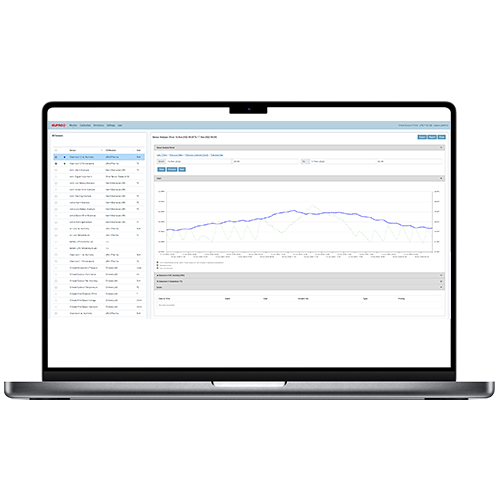
Project Execution, Software Configuration and Workflow Design
GxP-Compliant Documentation and Validation
Compliance is non-negotiable. Structured, GxP-compliant documentation simplifies qualification, validation, and audit processes. Adherence to industry regulations such as ISO 17025, CFR 21 Part 11, and GAMP® 5 ensures full regulatory alignment, giving peace of mind and reducing the risk of non-compliance.

Training and Change Management
Empowering the team is essential for long-term success. Tailored training programs ensure personnel can confidently operate and maintain the system. Change management strategies facilitate a smooth transition, addressing both technical and organizational needs.
In addition to conducting trainings, ELPRO also supports the development of training documents and Standard Operation Procedures (SOP) on request.
ELPRO's GxP-Compliant Risk-Based Qualification Strategy
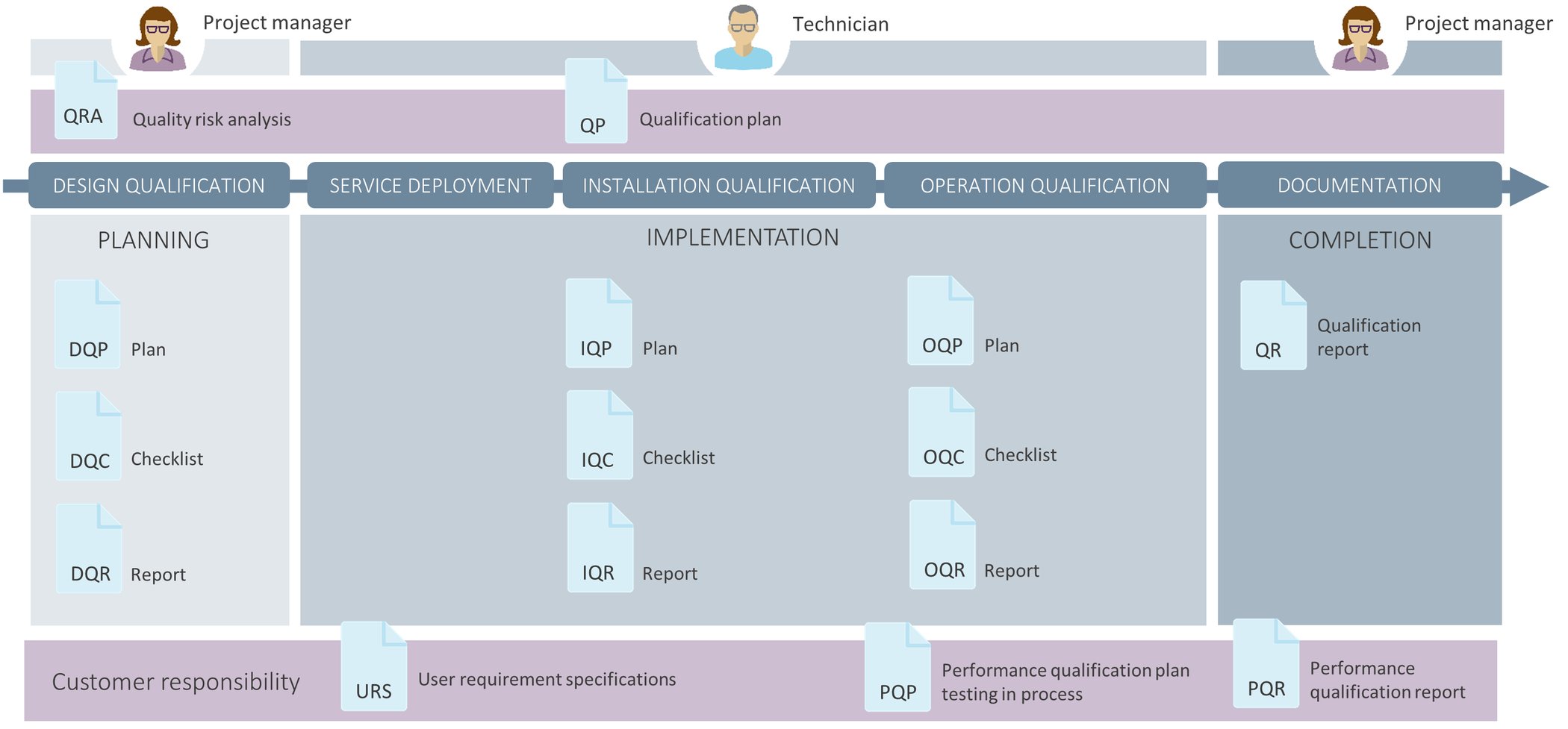
The basis for every project is the user requirements specification (URS). ELPRO's qualification plan includes a qualification strategy with an annually updated quality risk analysis of the system.
In the planning phase, the project manager oversees the system design qualification, including design qualification plan (DQP), design qualification checklist (DQC) or customer configuration briefing (CCB), and design qualification report (DQR).
After installation and calibration, the installation qualification (IQ) phase begins with the installation qualification plan (IQP), a checklist and the installation qualification report (IQR). The same procedure also applies to the operational qualification (OQ), during which the entire system is tested.
The final project phase includes documentation and control of performance recording and billing. After fine-tuning, the performance qualification (PQ) confirms long-term functionality. The customer is responsible for validating the entire process. Customer-specific configurations are tested or qualified by us on site.
What Customers Are Saying
ELPRO’s approach to project communication stands out as one of the best I’ve come across in my professional career.
ELPRO facilitated the qualification of both the temperature monitoring equipment as well as our cold storage units by providing excellent expertise and technical support just in time.
Compliance Made Easier
Navigating global regulations and standards can be complex—but with expertise, it doesn’t have to be. Comprehensive solutions are provided to keep companies compliant and prepared for upcoming audits, ensuring smooth operations worldwide at all times. The complexity is handled, allowing focus on what matters most—your success.

Ready to Get Started? Contact Us Today.
Frequently Asked Question about Management of GxP-Compliant Projects
How is effective coordination and communication ensured in complex projects?
ELPRO ensures smooth project execution through the following practices:
-
Single point of contact: Each project is assigned a dedicated contact person who manages all aspects and serves as the consistent communication channel for the customer.
-
Clear alignment: Project objectives, scope, and deliverables are clearly defined from the outset. Project managers work closely with stakeholders to ensure alignment on goals and expectations.
-
Experienced project management: Skilled project managers coordinate internal teams and external partners, actively manage dependencies, and resolve conflicts to keep the project on track.
How does ELPRO maintain high quality standards and support continuous improvement?
After project delivery, ELPRO conducts thorough reviews and evaluations to confirm that all requirements have been met and deliverables are completed to the satisfaction of all stakeholders. The project is then formally closed with mutual agreement. Insights gained during this phase also support continuous improvement of processes and future project execution.
What is the difference between GxP and non-GxP projects?
The key difference between GxP (Good Practice) and non-GxP projects lies in the regulatory standards and compliance requirements that apply to them. These distinctions are especially relevant in industries such as pharmaceuticals, biotechnology, and healthcare, where product quality, patient safety, and regulatory compliance are of paramount importance.
GxP Projects
GxP refers to a set of regulatory guidelines aimed at ensuring products are consistently produced and controlled according to quality standards. These guidelines are essential in industries like pharmaceuticals, life sciences, and healthcare.
- Regulatory Compliance: GxP projects are subject to strict regulatory oversight. These include FDA regulations (such as CFR 21 Part 11) and EU GMP guidelines. Compliance with these regulations is mandatory to ensure product safety, efficacy, and data integrity.
- Focus on Quality: GxP projects emphasize high standards of quality management, documentation, traceability, and audit trails.
- Examples: Pharmaceutical manufacturing, clinical trials, environmental monitoring in drug storage, and systems that involve patient data or medical devices.
Non-GxP Projects
Non-GxP projects are those that do not require compliance with GxP regulations and may not be subject to the same stringent oversight. These projects typically focus on general operational improvements rather than compliance with industry-specific standards.
- Less Stringent Requirements: Non-GxP projects do not need to meet the detailed quality, documentation, and audit requirements that are mandatory for GxP projects.
- Flexibility: They often have more flexibility regarding process design, risk management, and reporting. However, they still may follow general industry best practices for project management.
- Examples: Internal software development, non-regulatory process improvements, or product designs not directly impacting regulated sectors.
Key Differences
- Regulation and compliance:
GxP projects must comply with industry-specific regulatory standards, while non-GxP projects generally have fewer or no such regulatory requirements. - Documentation and validation:
GxP projects require rigorous documentation, validation, and audit trails, whereas non-GxP projects might have more relaxed documentation standards. - Risk Management:
GxP projects must implement strict risk management processes to ensure safety and regulatory compliance, while non-GxP projects may have less formal risk management frameworks.
In summary, GxP projects are highly regulated and require stringent documentation and compliance measures, whereas non-GxP projects are generally more flexible and not bound by the same level of regulatory scrutiny.
How does GxP risk assessment support effective risk management?
GxP risk assessment plays a crucial role in risk management by identifying, evaluating, and mitigating risks that could impact product quality, patient safety, and regulatory compliance. It ensures that pharmaceutical and life science companies proactively address potential failures in manufacturing, storage, and distribution processes.
Here’s how GxP risk assessment enhances risk management:
- Systematic Risk Identification—Helps detect potential hazards related to equipment, software, processes, and data integrity.
- Prioritization of Risks—Uses structured methodologies like FMEA (Failure Modes and Effects Analysis) or HACCP (Hazard Analysis and Critical Control Points) to assess severity, likelihood, and impact.
- Implementation of Risk Controls—Establishes preventive measures, such as process validation, environmental monitoring, and automated compliance checks.
- Continuous Monitoring & Documentation—Ensures compliance through audit-ready records, ongoing risk reviews, and regulatory reporting.
- Regulatory Compliance Alignment—Supports adherence to industry standards like CFR 21 Part 11, ISO 14971, ICH Q9, and GAMP® 5, reducing regulatory risks.
By integrating GxP risk assessment into risk management, companies can proactively prevent compliance issues, improve operational efficiency, and maintain high-quality standards in regulated environments.
What does GxP stand for?
GxP stands for "Good x Practice," where x represents different fields such as Manufacturing (GMP), Laboratory (GLP), and Distribution (GDP). It is a general term for regulations and guidelines ensuring quality, safety, and compliance in industries like pharmaceuticals, biotechnology, and healthcare.
Some common GxP standards include:
- GMP (Good Manufacturing Practice)—Ensures products are consistently produced and controlled according to quality standards.
- GLP (Good Laboratory Practice)—Ensures the reliability and integrity of laboratory studies.
- GDP (Good Distribution Practice)—Ensures proper handling, storage, and transport of pharmaceutical products.
- GCP (Good Clinical Practice)—Ensures the ethical conduct, safety, and reliability of clinical trials while protecting the rights and well-being of participants.
These guidelines help maintain product quality, regulatory compliance, and patient safety.
Newsletter-Sign Up ELPRO News
ELPRO will use the information provided in this form to keep in touch with you and to send you updates and marketing information by e-mail.