<img alt="" src="https://secure.perk0mean.com/184386.png" style="display:none;">
video poster image


On-/Off-Site Services  


Installation and Calibration Services for GxP-Compliance and Accuracy

Ensure the accuracy, reliability, and compliance of environmental monitoring systems with expert services. Experienced technicians perform calibrations according to ISO 9001 and ISO 17025 standards, traceable to national standards to guarantee precision and compliance. Temporary replacement devices are available to minimize downtime and maintain smooth operations.

ELPRO’s expert services include:

  • Professional on-site installation and qualification
  • System expansions
  • Annual on-site and off-site recalibrations
  • High- and low-temperature calibrations
  • Data recovery and repairs
Benefits

6 Reasons for GxP-Compliant Installation and Calibration

Icon_Reliability_90k_negative

On-Site Expertise

Expert field technicians handle installation, qualification, expansion, and annual recalibration of monitoring systems quickly and reliably.

Icon_Checkup_90k_negative

Monitoring Experts

ELPRO's technicians know all about monitoring temperature, humidity, particles, differential pressure, and many more parameters.

Icon_Software and Integration_V2_90K_neg

Software Support

Experienced software experts assist with IT and network issues, ensuring optimal integration of the solution into your systems.

Icon_Accuracy_90k_negative

Consistent Accuracy

We remind you of the annual recalibration well in advance, ensuring you can plan it around your production schedule.

Icon_Compliance_90K_negative

Global Compliance

Our calibration labs are accredited to ISO 17025 with full traceability to national standards.

Icon_Global_90K_negative

Global Support

With sales and service offices worldwide, we provide fast and reliable support wherever you need it.

Overview of On/Off-Site Calibration and Installation Services

  • Installation Services

  • On-Site Calibration

  • Off-Site Calibration

  • Calibration of Cryo Shipper

Black ECOLOG devices in a control cabinet.

Installation Services

ELPRO provides professional installation services for our hardware and software solutions, ensuring a reliable and compliant setup from the start.

Our experienced technicians handle the installation process efficiently, configure the software and qualify the system to meet your specific requirements.

For IT or network issues, customers can rely on our specialized software experts and their extensive project experience.

With our expertise, you can be confident that your monitoring system operates accurately and seamlessly within your GxP-compliant environment.
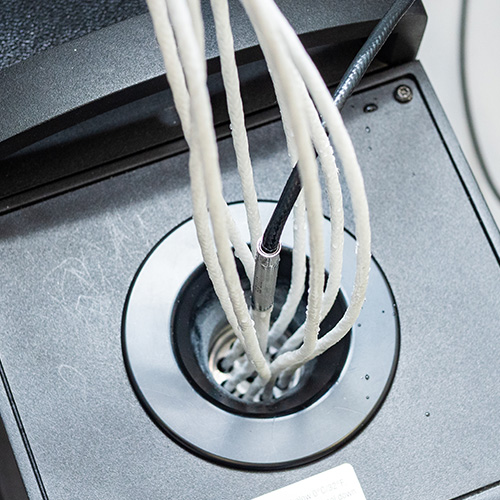
Various probes in the calibration block.

On-Site Calibration Services

ELPRO’s onsite calibration service ensures that your monitoring devices remain accurate and compliant without the need to ship them off-site. Our expert field technicians come directly to your facility, performing calibrations in accordance with ISO 9001 and ISO 17025, thus:

  • Eliminating transportation delays
  • Reducing equipment downtime
  • Allowing you to maintain full operational control

On request, we can guarantee seamless recording while the devices are being calibrated—particularly important for proof of compliance in critical infrastructures.
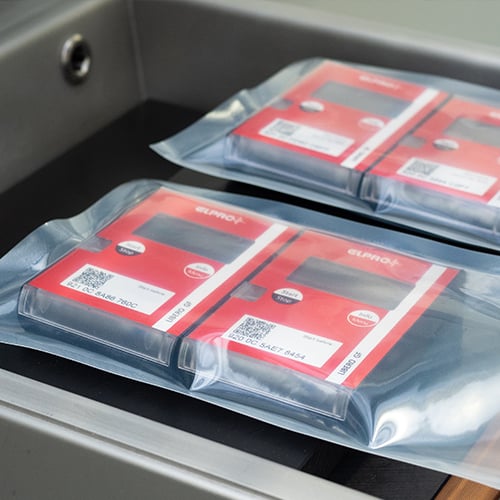
Monitoring devices are sealed in waterproof bags.

Off-Site Calibration Services

ELPRO’s accredited metrology laboratories worldwide provide a seamless process for sending your data monitoring instruments for recalibration and quality assurance. Our expert off-site calibration team follows stringent procedures to guarantee accurate and traceable calibrations. We can also provide temporary replacement devices while the equipment is out for testing and service, ensuring that our customer's operations remain uninterrupted.


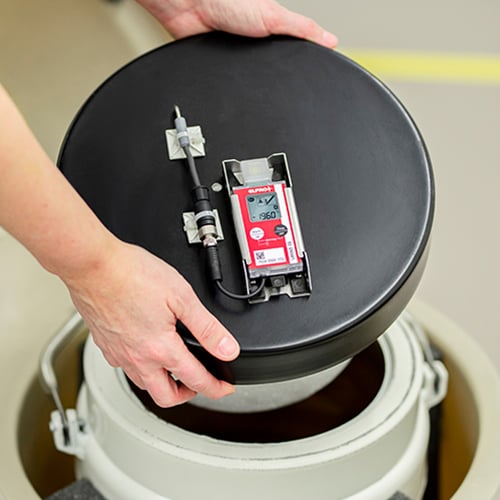
Monitoring device is mounted on the lid of a Cryo.

Installation and Calibration of Cryo Shipper Monitoring Kits

Rely on our experts to install and calibrate ELPRO temperature monitoring kits to ISO 9001 and ISO 17025 quality standards on your new or used cryo containers. Our technicians have experience to install the kit on all leading brands of cryo containers. The kit and services includes:

  • Quality inspection and cleaning of cryo shipper lids and parts
  • Temperature data logger (configured to your exact specifications)
  • State-of-the-art external sensor/probe with connector
  • Stainless steel mounting bracket (optional lockable)
  • Calibration points according to your specifications
  • Calibration certificates (manufacturing calibration or ISO 17025)
  • Guaranteed compliance
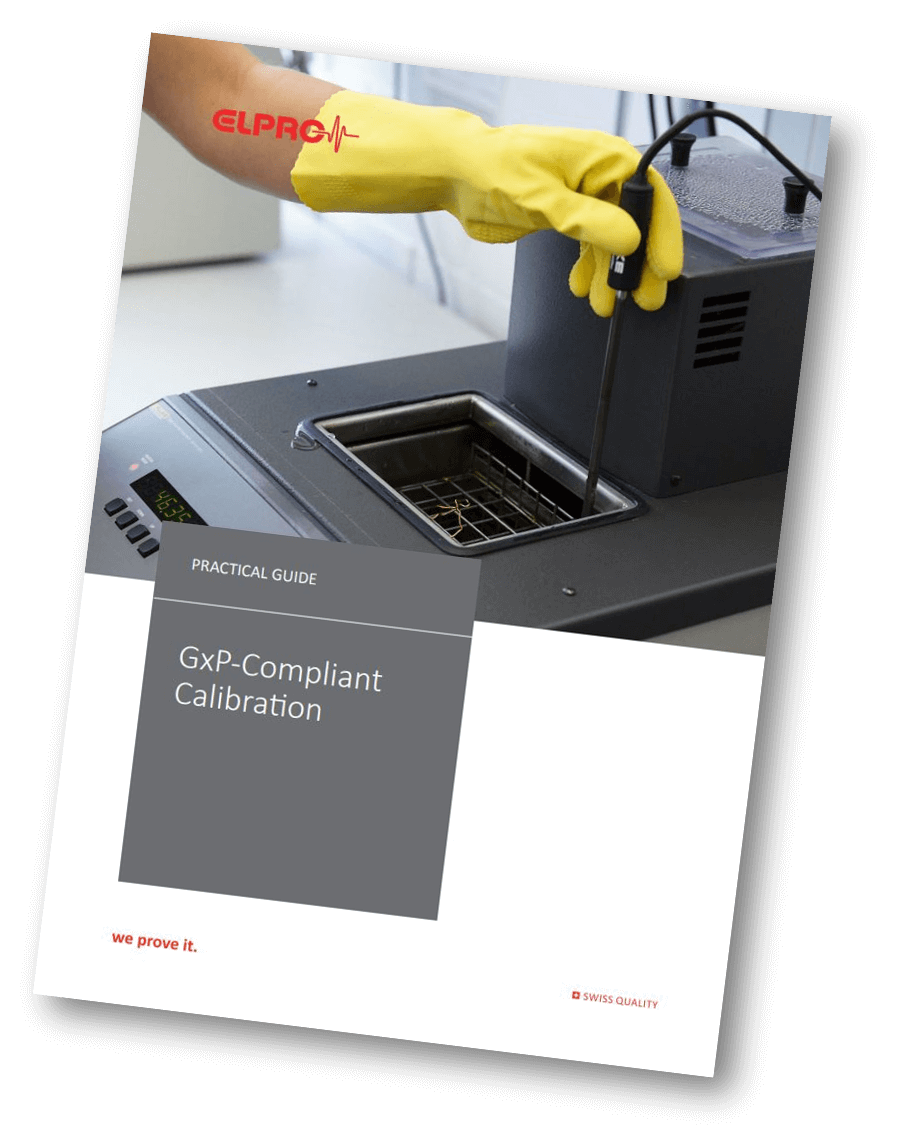
Practical Guide

Want to Know More About GxP-Compliant Calibration

Download our free practical guide on everything you need to know to answer these questions:

  • What regulations say with regard to calibration?
  • Are sensors calibrated during production?
  • How can I keep my entire system GxP-compliant?
DOWNLOAD
Calibration Certificates

Always the Right Certificate at Hand 

A valid calibration certificate confirms that your GDP-compliant data loggers operate within the correct specifications. Regular calibration of sensors, probes, and thermometers safeguards temperature-sensitive products at every stage—from lab storage to transportation.

With ELPRO’s online certificate download service, you always have access to the latest calibration certificates—ready whenever you need them, even during an audit. Easily download calibration certificate PDFs for the following data loggers and indicators:

  • LIBERO Cx and LIBERO Cx BLE
  • LIBERO Gx
  • LIBERO W
  • ECOLOG-PRO 1NTR and ECOLOG-PRO xG
Two office folders on file containing the qualification documents.


Want to See It on Paper?

We fully comply with all current regulations and standards, ensuring the highest levels of quality, safety, and sustainability. Beyond compliance, we are committed to supporting our employees and protecting the environment in everything we do.

Customers can easily access and download all relevant certificates, accreditations, and policies from our database, including:

  • Certificates
  • Accreditations
  • Code of conduct & ethical code
  • ELPRO’s environmental considerations
Logo_Certified_ISO_Company_black_transp_80%_150x150
Logo_Accredited_ISO_Company_black_transp_80%_150x150
Logo_Reach_Compliance_black_transp_80%_150x150
Logo_ROHS_Compliant_black_transp_80%_150x150
Logo_ecovadis_black_transp_80%_150x150
Logo_IATA_black_transp_80%_150x150
Logo_ISPE_Gamp_black_transp_80%_150x150

Let's Talk About Your Next On-/Off-Site Project. Contact Us or Schedule a Service Today.

ELPRO-Monitoring-Specialist a woman intelligent female GxP Consulting and Qualification
FAQs

Common Questions About On-/Off-Site Calibration

What is a calibration of a data logger or sensor?

A calibration is a reliable, reproducible, and documented comparison of a device under test (data logger, sensor) with a traceable reference. The reference is a high-precision instrument, which is checked regularly by an accredited laboratory (accreditation bodies for Switzerland: SAS/SCS; USA: ANAB or NIST; Germany: DAkkS; UK: UKAS). A calibration is performed at one or several defined measurement points. To perform the calibration, a device/machine is needed to keep a stable environment:

For temperature:  A calibration bath, block or fixed point (i.e. ice water or liquid nitrogen) keeps a constant temperature to let the two devices adjust to the temperature point (e. g., for 30 minutes).

For humidity:  A humidity generator or a reference solution (salt water) generating a defined humidity at a given temperature to let the two devices adjust to the relative humidity (e.g., for 2 hours).

The two sets of measurements (the device under test and the reference device) are compared. A decision is made on conformance to specification and the result is documented in a calibration certificate.

What do regulations say about calibration and recalibration?

Regulations around calibration and recalibration are primarily focused on ensuring that measurement instruments maintain accuracy and reliability over time, especially in industries where precision is crucial, such as pharmaceuticals, healthcare, and life sciences. Specific rules vary by industry and region, but key principles generally include:

  • Calibration frequency: Regulations often require that equipment be calibrated at specified intervals, based on manufacturer recommendations, the critical nature of the device, and how often it is used. In industries like pharmaceuticals, the frequency of calibration is often tied to Good Manufacturing Practices (GMP) or Good Distribution Practices (GDP), which stress that equipment must remain accurate to ensure product quality, safety, and compliance.
  • Recalibration after maintenance or repair: If a device undergoes maintenance, repair, or any event that may affect its accuracy, recalibration is typically required to ensure that it still meets the necessary standards. This is important in maintaining GxP (Good x Practice) compliance.
  • Traceability to national or international standards: Calibration must be traceable to recognized national or international standards, ensuring the device's measurements are aligned with universally accepted values. This is often a requirement under regulations such as ISO standards or the U.S. Food and Drug Administration (FDA) regulations.
  • Documentation and records: Regulations generally require comprehensive documentation of calibration and recalibration activities. This includes keeping records of calibration results, certificates, and any corrective actions taken. These records are important for demonstrating compliance during audits and inspections.
  • Qualified Personnel: Calibration and recalibration should be performed by qualified personnel who are trained in the proper methods and who follow industry standards. Regulations often stipulate that those performing calibrations must have the necessary knowledge, tools, and qualifications to ensure the accuracy and reliability of the calibration process.

In the pharmaceutical and healthcare sectors, these regulations are especially important because inaccurate measurements can affect product quality, patient safety, and regulatory compliance. Recalibration ensures that devices continue to meet necessary standards, providing confidence that measurements are reliable.

How often do I need to recalibrate my sensor?

The frequency of recalibrating a sensor depends on several factors, including the type of sensor, its usage, the environment in which it operates, and the regulatory or industry requirements. Here are some general guidelines to consider:

  • Manufacturer recommendations: Always refer to the manufacturer's instructions for calibration intervals. Many sensors have recommended calibration schedules based on usage and environmental factors.
  • Regulatory requirements: In industries such as pharmaceuticals and healthcare, regulatory standards (e.g., GMP, GDP, ISO) often dictate calibration intervals. These guidelines can range from annually to more frequent recalibration, depending on the criticality of the measurements being taken.
  • Sensor usage: If the sensor is used continuously or in harsh conditions (extreme temperatures, humidity, vibration, etc.), recalibration may be needed more frequently. In less demanding environments, the intervals might be longer.
  • Environmental factors: Environmental conditions can impact sensor performance. For example, sensors exposed to extreme temperatures or corrosive substances may require recalibration more often.
  • Performance monitoring: Some sensors may drift over time. If you notice any deviation in the sensor's readings or if the sensor is not providing accurate results, recalibration is necessary, regardless of the scheduled interval.
  • Industry best practices: In certain industries, sensors are often recalibrated every 6 to 12 months, but more frequent recalibration may be required for critical applications.

In general, it's recommended to follow a preventative maintenance schedule, where sensors are checked regularly for accuracy, even if no issues are observed. If your application is critical (such as monitoring temperature in pharmaceuticals), more frequent recalibration may be necessary to ensure compliance with quality and regulatory standards.

What does GxP stand for?

GxP stands for "Good x Practice," where x represents different fields such as Manufacturing (GMP), Laboratory (GLP), and Distribution (GDP). It is a general term for regulations and guidelines ensuring quality, safety, and compliance in industries like pharmaceuticals, biotechnology, and healthcare.

Some common GxP standards include:

  • GMP (Good Manufacturing Practice)—Ensures products are consistently produced and controlled according to quality standards.
  • GLP (Good Laboratory Practice)—Ensures the reliability and integrity of laboratory studies.
  • GDP (Good Distribution Practice)—Ensures proper handling, storage, and transport of pharmaceutical products.
  • GAMP® 5 (Good Automated Manufacturing Practice)—Ensures that computerized systems in the pharmaceutical industry are validated for compliance, quality, and patient safety

These guidelines help maintain product quality, regulatory compliance, and patient safety.

Newsletter-Sign Up ELPRO News

ELPRO will use the information provided in this form to keep in touch with you and to send you updates and marketing information by e-mail.


Symb_Digital_Call_Laptop_Conference_600x314