For many years, pharmaceutical companies have been monitoring the transport of sensitive products including traditional data loggers with preconfigured alarm profiles in their shipments. This setup creates complexity—warehouses must stock multiple device types, shipments require precise planning, and even products that arrive within stability limits are quarantined as soon as the data logger triggers an alarm based on its profile.
With increasingly complex supply chains, increasing time pressure for product releases, and high administrative costs, quality and supply chain teams are facing mounting challenges. However, with the software-based alarming in ELPRO's cold chain database liberoMANAGER, assessment and release processes can now be made significantly more efficient—automated, traceable, and GxP-compliant. What used to take days can now be done in a matter of minutes.
Complex Supply Chains—Increasing Pressure
Today's pharmaceutical companies operate complex, multi-stage supply chains that span national borders. Often, different products with individual stability budgets are transported and must be tracked separately. Temperature deviations must be quickly detected and evaluated to ensure product quality and enable rapid release and further processing of the shipment. At the same time, companies are striving to significantly reduce the manual effort involved in assessments and documentation. In such scenarios, assigning a single alarm profile to a data logger no longer works.
From Shipment Assessment to Automated Release at Product Level
Numerous companies worldwide rely on the proven LIBERO data loggers to reliably record and monitor the transport conditions of temperature-sensitive products within their supply chains. The LIBERO data loggers generate GDP-compliant reports that can be comprehensively analyzed with elproVIEWER as needed. The tool can also be used to perform reassessments.
However, when supply chains become more complex, for example due to shipments containing products with different stability budgets, this approach reaches its limits. PDF reports only allow for evaluation at shipment level, meaning that manual steps by quality managers are still required for product-specific assessment and release.
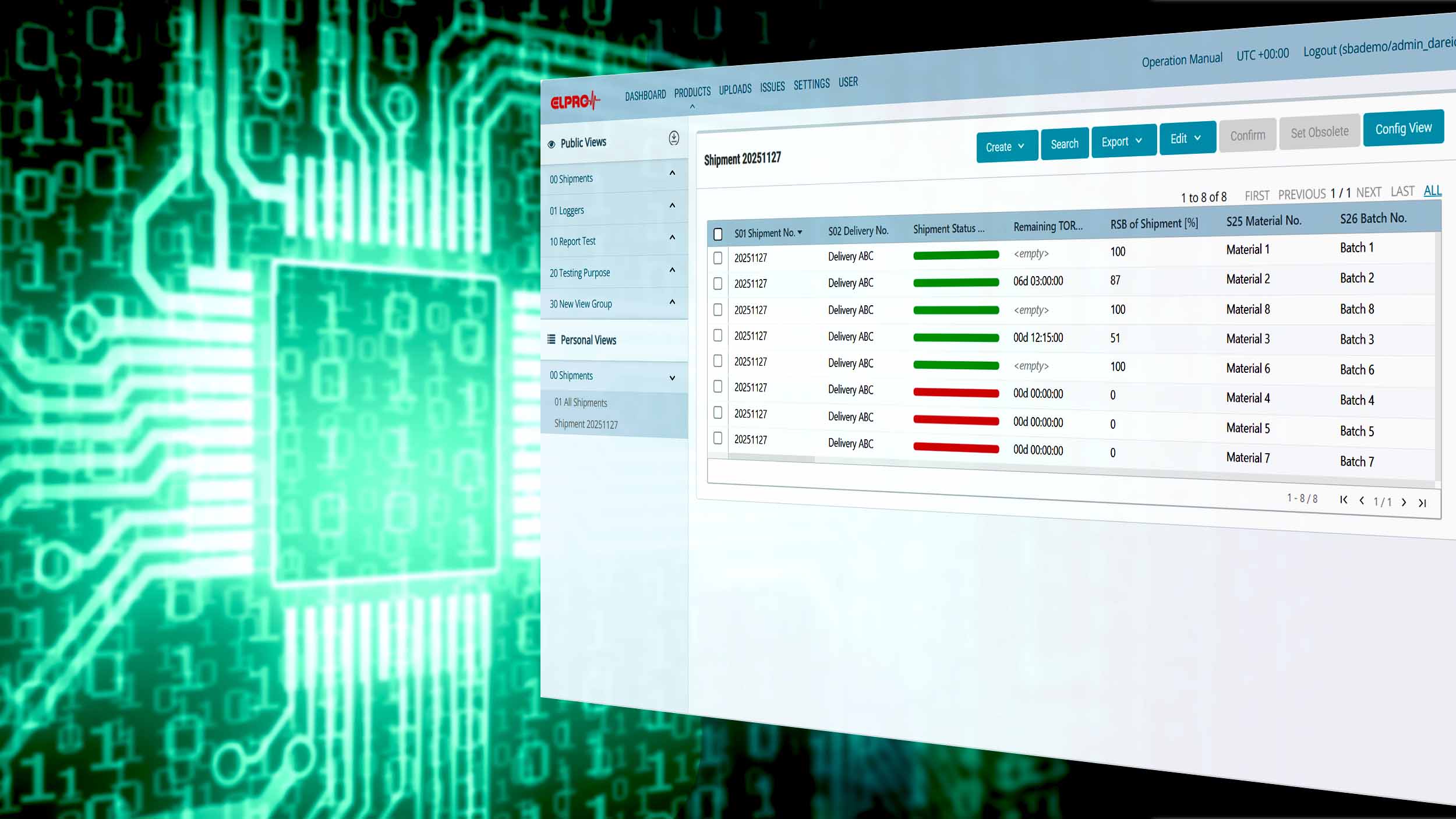
This is where liberoMANAGER comes in. With advanced features such as central archiving, auto assessments, and software-based alarming, the solution enables product-based, automated assessments. This reduces manual work, shortens release times, minimizes unnecessary quarantines, and makes the entire process significantly more efficient.
Software-Based Alarming as a Game Changer
Until now, shipments with different stability budgets, known as mixed loads, were evaluated based on the most sensitive product. The data logger was configured with a profile that corresponded to the strictest stability budget.
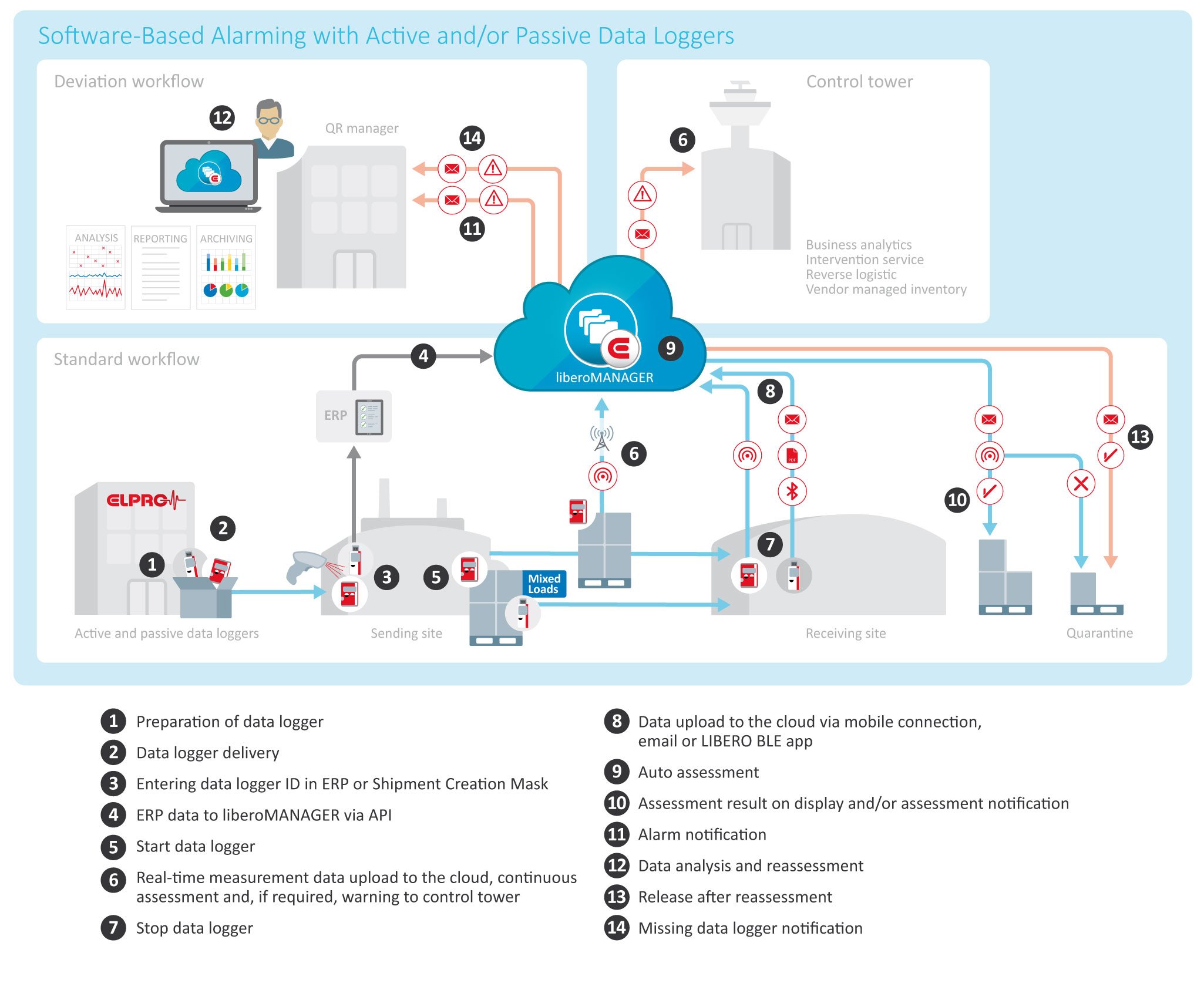
With software-based alarming, the assessment is no longer carried out by the data logger itself—OK or ALARM—but individually for each product in the database. The data recorded by the data logger is compared with the stored stability budgets for each individual product in the shipment. This is followed by a product-specific assessment based on preconfigured release workflows and automated notifications.
This means that only products whose stability budget has been exceeded are placed in quarantine. Manual reassessments, unnecessary quarantines, and shipping delays are drastically reduced.
"By shifting stability control from the data logger to the software, companies gain greater flexibility, better data quality, and significantly faster release cycles. This change lays the foundation for fully digital quality release processes, where manual assessments are the exception rather than the rule."
Christoph Bamert, Chief Sales Officer, ELPRO
Advantages of Software-Based Alarming at a Glance
With liberoMANAGER, release processes can be made significantly more efficient—while maintaining full GxP compliance. Auto assessments reduce the time required for shipment evaluation from days to minutes, allowing releases to be made in near real time. At the same time, a single data logger per shipment is sufficient, which saves hardware, reduces costs, and increases sustainability.
The assessment after shipment is fully automated. Results, comments and releases are stored centrally, can be automatically communicated to receiving sites via configurable workflows, and are verifiable in audits at any time. Only products with actual deviations are quarantined, avoiding unnecessary delays and costs. This allows quality and supply chain teams to benefit from faster decisions, seamless traceability, and full GxP compliance.
"We can now dedicate our attention to critical tasks that require human expertise, beyond the reach of digitalized automated solutions."
Christian Rieger, Senior Manager QA, Acino
Making the Switch is Easier Than You Think
Despite the clear benefits of liberoMANAGER and software-based alarming, many companies still hesitate to make the actual switch. Typical concerns include: additional tools and platforms increase perceived complexity; switching to a new system seeming like a major project involving many people; uncertainties regarding validation costs or interventions in existing systems; questions about whether the system fits existing processes; and budget is often being cited as a limiting factor.
These concerns are understandable – but in most cases, they appear larger than the actual hurdles. This is because companies are not alone when it comes to implementing such a project. ELPRO brings valuable experience from numerous projects and accompanies companies through the entire conversion process—from planning and implementation to go-live support. This allows the advantages of automated processes to be realized quickly, while effort and risks remain manageable.
"We placed our trust in ELPRO for this project due to the convincing expertise and professionalism of our project partners. Their guidance and commitment ensured the success of the entire process."
Vincent Marty, Head of Logistics & Operations, Acino
Gain Efficiency and Safety with Software-Based Alarming
Software-based alarming is an investment in efficiency, compliance, and future- readiness. It increases automation, reduces paperwork, minimizes deviations and manual assessments, and provides real-time visibility for warnings and temperature deviations. Automated assessment processes ensure that decisions can be made quickly, transparently, and in compliance with GxP.
In short, software-based alarming in liberoMANAGER revolutionizes the assessment of pharmaceutical shipments. It combines smart data logger technology with product knowledge and automation—making a decisive difference for secure and efficient supply chains.