<img alt="" src="https://secure.perk0mean.com/184386.png" style="display:none;">

Basics of Real Time and Cold Chain Temperature Monitoring

Find out more on how to manage your temperature-controlled supply chain. Get a general introduction of cold chain monitoring and discover information on topics like stability budget, mean kinetic temperature (MKT), and more.


What is Cold Chain Monitoring?

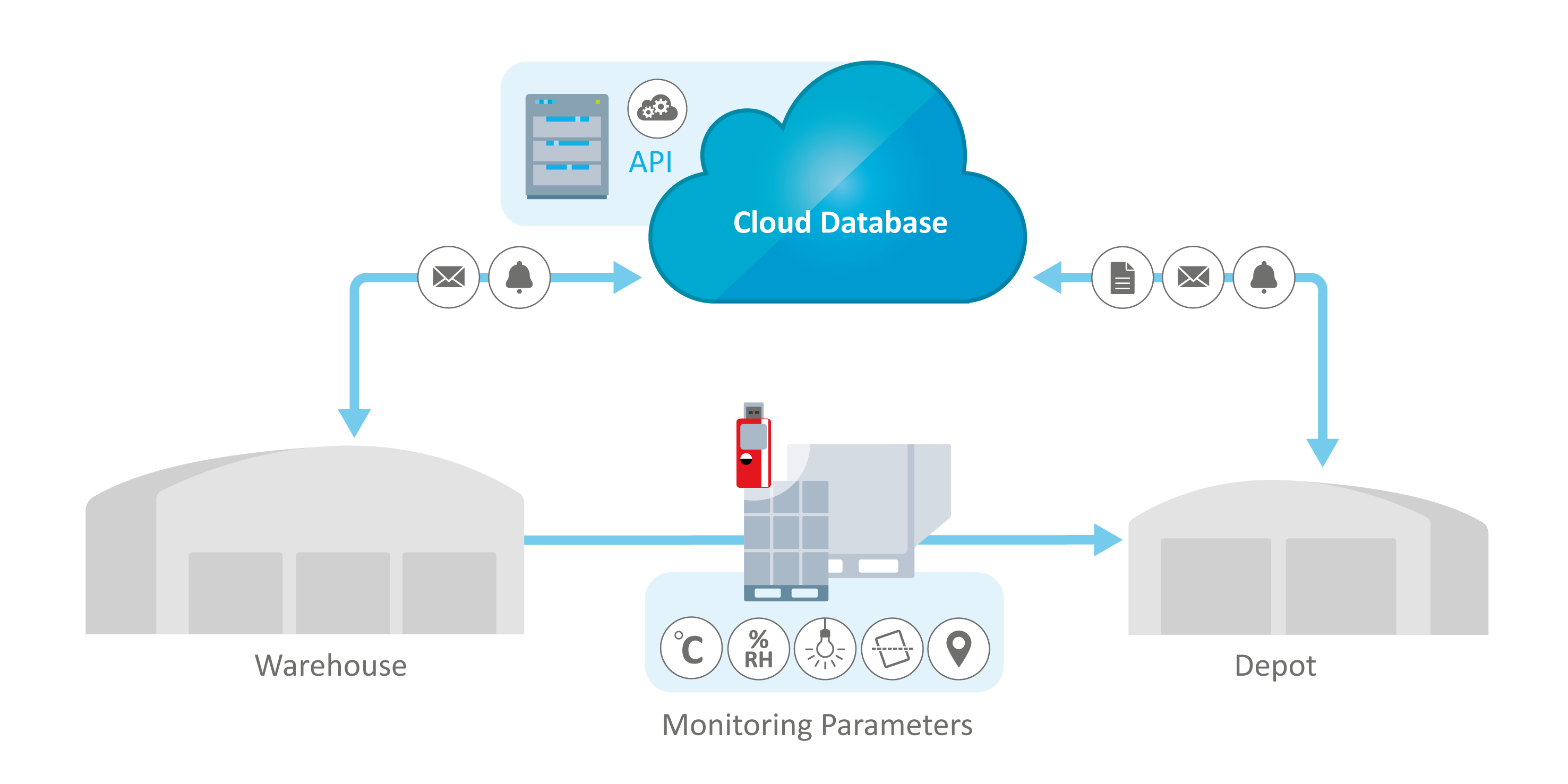
The expansion of cold storage facilities and temperature-controlled transport in the 20th century revolutionized food preservation, which was once a major challenge. Cold chain monitoring refers to the series of actions and equipment used in a supply chain to maintain unbroken temperature control, ensuring the quality of perishable products.

Cold Chain as an Industry

Cold chain management has evolved into a specialized industry, involving various players:


  • Freight forwarders coordinate temperature-controlled trucking and air cargo services.
  • Container leasing companies provide temperature-controlled containers.
  • Packaging companies offer custom transport solutions with Phase Change Materials (PCM) and Vacuum Insulated Panels (VIP).
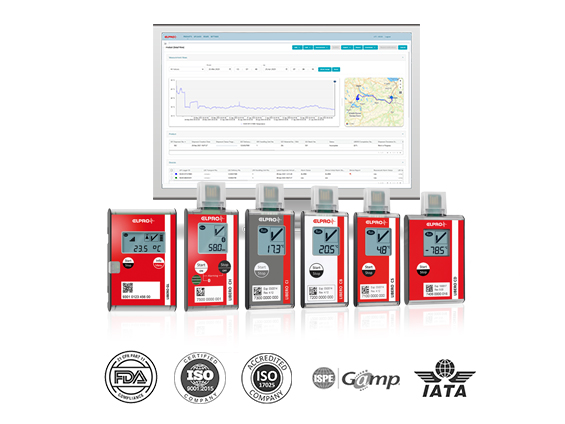
  • Solution providers offer electronic temperature monitoring and data management systems.

Cold Chain as a Technology

Cold chain technology involves physical principles to maintain and document temperature conditions, such as:


  • Compressor-based heating and cooling
  • Phase Change Materials (PCM)
  • Insulation technologies
  • Electronic temperature sensors
  • Wireless data transmission and software solutions

Cold Chain as a Process

Cold chain management involves strict processes (Standard Operating Procedures) to ensure products are properly manufactured, stored, transported and monitored. Key steps include:


  • Correct packaging and temperature monitoring
  • Timely transportation to avoid exposure to extreme conditions
  • Adhering to release protocols upon arrival

Cold Chain as a Science

Cold chain management is also a science, focusing on the biological and chemical processes behind product degradation. The sensitivity to temperature differs between food and pharmaceuticals:


  • Food: Sensitive to bacteria, gases, temperature, and humidity, requiring shorter supply chains.
  • Pharmaceuticals: Protected by packaging and typically less sensitive to temperature, but product quality issues may not be visible, such as potency loss in frozen vaccines.

The History of Cold Chain Monitoring

Cold chain monitoring began in the food industry, with the harvesting of ice blocks and early refrigeration technologies in the early 20th century. The pharmaceutical cold chain became prominent in the 1990s, particularly for biologics like insulin, blood products, and vaccines, requiring refrigerated conditions (2-8°C). In 2013, the EU-GDP guidelines expanded the scope to include room temperature products (15-25°C), leading to the term "Temperature Controlled Logistics."

Symb_historical market_zugeschnitten

From Cold Chain Monitoring to Temperature Controlled Logistics

Although the principle of vaccination was detected already in 1796 and the first insulin was purified in 1922, today most pharmaceutical products still are chemical products, which have been considered “non-sensitive to temperature” until just a few years back. Therefore, while the food cold chain has grown big already in the 1960’s and 1970’s, the pharma cold chain started focusing on this topic in the 1990’s with fast growing markets in insulin, blood products and vaccines. Since those products are all “biological products” (substance derived from a living organism), the main focus of the (pharma) cold chain industry was technologies and processes for keeping product “cold” or refrigerated at 2-8 °C. The main term used was therefore cold chain technologies and cold chain management.

Later in 2013, the new version of the EU-GDP guidelines changed the scope to include all pharmaceutical products and medical devices carrying a label condition; referred to as “room temperature products” or “Controlled Room Temperature (CRT)” with label conditions of 2-25 °C or 15-25 °C. Since then, the term used has shifted from “Cold Chain Logistics” to “Temperature Controlled Logistics” – in particular in specialized expert discussions.  


The Difference Between Food Cold Chain and Pharma Cold Chain Monitoring

What are the commonalities and differences between the food and the pharma cold chain? Although both product types are sensitive to temperature, there are significant differences:


Food products are often “open” and exposed to bacteria, chemicals and humidity. They are therefore sensitive to various environmental parameters. Shelf-life of food products vary widely from a few days to many years depending on the product and the temperature range (frozen, fresh or controlled). Therefore, the lengths and complexity of the supply chain has a great variance. Most food products are in fact much more sensitive to temperature than pharmaceuticals and must therefore have shorter supply chains. For example, freshly cut roses are produced in India and must reach the consumer in Europe within 7 days before they fade and lose their commercial value. They are highly sensitive to temperature, start fading fast at temperature above 10°C and cannot be frozen at all.
 
Pharmaceutical products are “packaged” (at least as commercial product) and are therefore protected from bacteria, chemicals and humidity. Most commercial pharmaceutical products have shelf-lives of 18 – 36 months and they are often less sensitive to temperature compared to food products. The big challenge with most pharmaceutical product is that the quality and level of degradation is not visible to the patient: you cannot see or smell if a vaccine has been frozen and has lost its potency (or might even be harmful).

The Food Cold Chain is about preserving the commercial value.The Pharma Cold Chain is about protecting patient safety.

The Clinical Trials Cold Chain

Clinical trials are research investigations where human volunteers test new treatments to assess their efficacy and side effects. These trials are organized in phases, involving more participants as the process advances.

CCM_Clinical Trials_Stability Budget


What Products Require Health Authority Approval?

  • Consumer healthcare products (e.g., skin care, functional foods)
  • Over-the-counter (OTC) medicines (e.g., cough syrup, vitamins)
  • Pharmaceuticals (e.g., cardiovascular medicine, psychotropic drugs)
  • Biopharmaceuticals (e.g., insulin, cancer drugs)
  • Personalized medicine (e.g., modern cancer therapies)
  • Medical devices, including (bio)pharmaceuticals (e.g., coated stents)
  • Vaccines (e.g., polio, Ebola)
  • Blood and blood products (e.g., fresh blood, plasma)


Are Investigational Medicinal Products (IMP’s) More Sensitive to Temperature?

Physically, drug substances don’t change their sensitivity to temperature. However, as a drug substance moves through clinical phases, researchers perform additional accelerated stability studies. These studies provide the information needed to define the product’s stability budget.


Stability Budget – Ensuring Patient Safety in Cold Chain

Most pharmaceutical products, in particular biopharmaceuticals, products change as they age. However, they are considered to be stable as long as their characteristics, or potency, remains within the specifications. The number of days that a product remains stable at the recommended storage or label condition is called “shelf life”. Typical label conditions of packaged pharmaceutical products, which are either used in hospital or sold over the counter, are 2-8°C, 15-25°C and sometimes 2-25°C. The experimental protocols used for data collection serving as the basis for estimation of shelf life are called “stability tests”.

Diagramm-1

Example: Results from accelerated stability testing – potency of a biopharmaceutical at different temperatures and duration.


Who Owns the Stability Budget?


The owner of the stability budget clearly is the Marketing Authorization Holder (MAH) – the company that applies for registration of a product in a certain market. Within this company, the natural owner is the quality department.
 
From a document or data perspective, the stability budget is a defined set of data under strict version control, which is typically documented in a pdf document, sometimes also stored in dedicated software.
 

How Often Does a Stability Budget Change?

Stability budgets and expiry dates can increase over time - but only in very early phase I clinical trials for drug substances which are really new. Already in phase II clinical trials, stability budgets and expiry dates are typically set and stable for the time of the clinical trial and also later in commercial use.
 
In later (commercial) phases, it is very unlikely to change the stability budget or the expiry date. Expiry dates must be available in clear text on each kit as well as on the carton. So for example, each vial needs to be labelled as well as the carton containing the vials.

How to Conduct a Stability Test


Stability Tests can be performed increasing the time and temperature margin a pharmaceutical product can be exposed to. During stability testing, the active ingredient is exposed to temperatures outside the label condition for a certain time and afterwards tested to prove its safety and potency. There are two types of stability testing:

  • In real-time stability testing, a product is stored at recommended storage conditions and monitored until it fails the specification. This can take very long – and time is of essence in product development.
  • In accelerated stability tests, the product is stored at increased temperatures. After defined time periods, the degradation is assessed and compared with the prediction of the known relationship between acceleration factor “temperature” and the degradation rate (Arrhenius equation).
 

Is the Stability Budget Shared? What are Typical Transport Conditions?

The stability budget is owned by the Marketing Authorization Holder (MAH). They typically do not easily share the stability data with logistics providers (3PL, forwarders, wholesale) since they need to safeguard the product integrity up until the patient.

Therefore, they purchase dedicated temperature controlled services from their Logistics Service Providers (LSP), which are typically "Refrigerated" or "Room Temperature" promising that they will never exceed conditions like 2-8°C or 15-25°C.
 
Coming up with rules that are more comprehensive (like for example "2-8°C but it can have 10h excursions up to 20°C") would be much too complex for LSPs. However, if manufacturers control the stability budget and use it in an efficient way (e.g. build the limits into the acceptance criteria of the data logger and/or the database), their lives and workloads could be easier and save significant cost. 


How is a Stability Budget and the Expiry Date Predicted?

When developing new drug substances, the time to market is paramount. Therefore, besides performing real-time stability tests, pharmaceutical companies in most cases choose to also perform accelerated stability studies and predict the expiry date by the Arrhenius equation. During such accelerated stability studies, the various batches of the drug substance are exposed to defined elevated temperatures (e.g. 25°C, 30°C, 40°C) and after defined time slots (e.g. 6 days, 28 days, 3 months, 12 months, 24 months 36 months) the potency of the product is measured. So often during phase 1 in clinical studies, only a limited stability budget is available and later in the process more hours are added to the budget. This step-by-step approach is shortening the time to market compared to performing real-time stability tests only. As a "side result", the stability budget is created.

An example: A biopharmaceutical company has found a new drug substance and they are ready to perform clinical studies on patients. The product has a liquid form and is stored refrigerated.

Example: Early Phase Stability Study - Accelerated stability study of 3 months.

Tabelle1

Different lots or batches of the substance are exposed to different temperatures. After different periods (6 days, 28 days, 3 months), a test is performed if >80% of active ingredient is still potent. As a result of this early phase, a first version of the stability budget is issued (in above case 8-25°C for 3 months, 25-40°C for 28 days). Since after 3 months more than 98% of the potent is still there, a first (conservative) version of the expiry date is calculated using the Arrhenius equation and defined to be 6 months.

Example: Later Phase Stability Study - The Accelerated stability study is extended to 24 months.

Tabelle2

The same substances are still exposed to the same temperatures and tested after different periods to determine if the ingredient is still potent more than 80%. As a result, a new version of the stability budget is issued (in above case 8-25°C for 12 months and still 25-40°C for 28 days). After 24 months, still 91% of the potency is available if stored at 5°C. Based on stress tests and other safety and market considerations, the final expiry date is defined to be 24 months.


Mean Kinetic Temperature (MKT)

Mean Kinetic Temperature (MKT) is used in the pharmaceutical industry to evaluate the effect of fluctuating temperature over time on the efficiency and safety of a biopharmaceutical product. The MKT formula goes back to the Swedish scientist Svante August Arrhenius (1859 – 1927) who was born in Uppsala.

MKT is a weighted average temperature (one single number) which summarizes (or simulates) the thermal challenge a drug substance (or drug product) would experience over a range various temperatures for a defined time period. The mean kinetic temperature is by definition higher than the arithmetic average temperature since it takes into consideration the Arrhenius equation:

Mean Kinetic Temperature

The higher (and longer) a drug product is exposed to high temperatures, the faster it decomposes.


What Can Mean Kinetic Temperature be Used for?

MKT can be used for different purposes:

  • Stability Study: MKT can be used to simulate (predict) the decomposition of a drug substance during a stability study.
  • Storage: In regulatory documents, there is a wide consensus, that MKT can be used to assess temperature excursions outside label condition of refrigerated and room temperature products.
  • Transport: Some guidance documents also suggest using MKT in transport environments – but be aware of limitations.

Mean Kinetic Temperature Rules:

  • Mainly use MKT for storage – the longer the time period, the more informative is MKT
  • Only use MKT in set-ups where you have temperature control (refrigerated or room temperature)
  • MKT does not work for frozen product
  • Use MKT to evaluate temperature excursions (but not to compensate earlier excursions)
  • MKT is just another indicator to evaluate temperature excursions. Mind freeze/thaw cycles (which MKT is not taking into consideration)

Contact Our Cold Chain Monitoring Consultants Today

ELPRO's experienced project team ensures that your cold chain monitoring project runs smoothly. Our experts support you from planning to implementation and help you to increase efficiency, meet legal requirements and maintain the highest quality standards. Let's talk about your next project.
A sympathetic, authenticlooking person who exudes trustworthiness and professionalism, standing in a clean and modern environment directed to ELPRO-2

Newsletter-Sign Up ELPRO News

ELPRO will use the information provided in this form to keep in touch with you and to send you updates and marketing information by e-mail.


Symb_Digital_Call_Laptop_Conference_600x314